

The older we get, the more we’re convinced creativity is as much about your omissions as it is about your additions. It’s equal parts invention and restraint — holding back the notes that would otherwise muddy the melody.
Just as control is the best measure of strength, restraint can be the best measure of creativity. It’s not just assembling the “best” things, it’s curating to evoke an emotion — chefs don’t just throw together steak, cake, and mac and cheese, they make a meal that makes you feel!
Sometimes we see musicians or artists at their best before they’re truly discovered. And it makes sense — they have less to work with, which makes constraint a pre-requisite for creating anything in the first place. Their limitations fuel their creativity.
On a personal level, we felt the inevitability of constraints and the importance of restraint when we moved back to Georgia. We’ve lived in our home for over a year and a half, and we’ve learned so much in that time about the importance of living in a space before you view it as complete.
There’s a temptation to strive for conclusions in so many aspects of life — especially when your job is making videos about “before’s and after’s” — but we’ve had to become comfortable with living in (and posting about) partially finished spaces. While unsatisfying at times, we never want to just put a bow on a project “for the ‘gram” or buy something beyond our budget just to feel a sense of relief.
A collected home takes time. Sometimes your tastes and the pieces you pick up along the way have to mature together before you see meaningful progress. Creating an environment you love means becoming comfortable with the in-between.
We’ve dubbed this process “the final 15.” This thought isn’t original, but it has kept us focused on decorating a space 85% of the way, which gives us plenty of room to evolve as new inspirations enter our lives. It forces patience, encourages restraint, and ultimately breeds creativity. (It is also an admission that our tastes and desires do change over time and gives you room to make changes without flipping your home.)
Our breakfast room was the best example of this. At first, it was just a white room connected to our kitchen, and we weren’t sure what to do with it. The dining table from our NYC apartment was in there for the first couple of months while we discussed what was next.

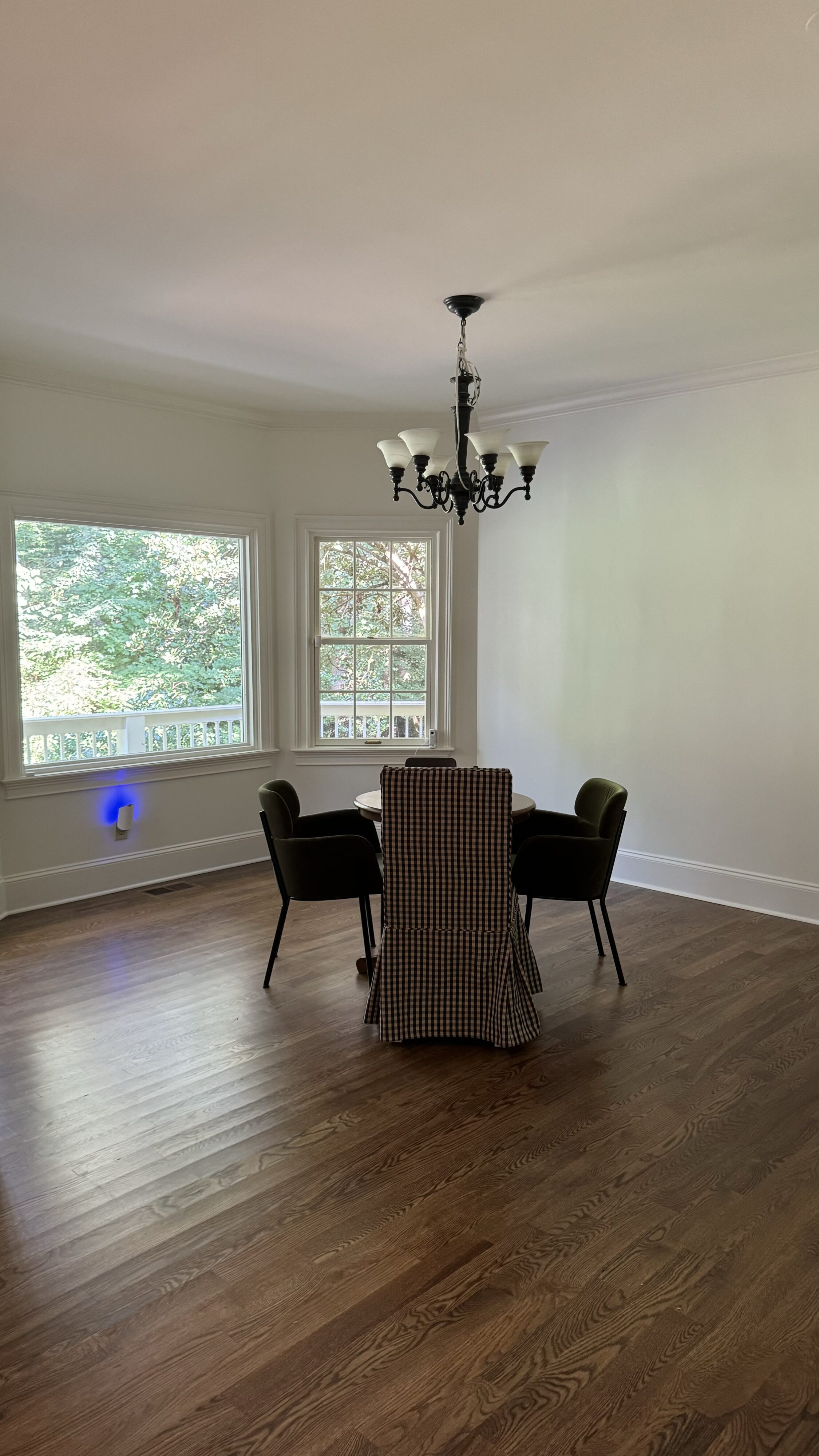
Then, we added a proper dining table, bench, and chairs while swapping out the light fixture and adding sconces and art. A month later, we added wallpaper. Not much changed for awhile after that.
Some small pieces came in and out, but otherwise we tried to be patient. We were confident it wasn’t done, but we didn’t have a full handle on what that meant until recently.
The space was functional, but something about it never felt full enough! I knew months ago I wanted to paint the trim a dark green color to go with the wallpaper, but I didn’t go for it until last month. That small change became the surprising catalyst for finishing out the space. Suddenly, the room felt dynamic, fuller, and more interesting, which also made it easier to envision other pieces of furniture or decor in it.

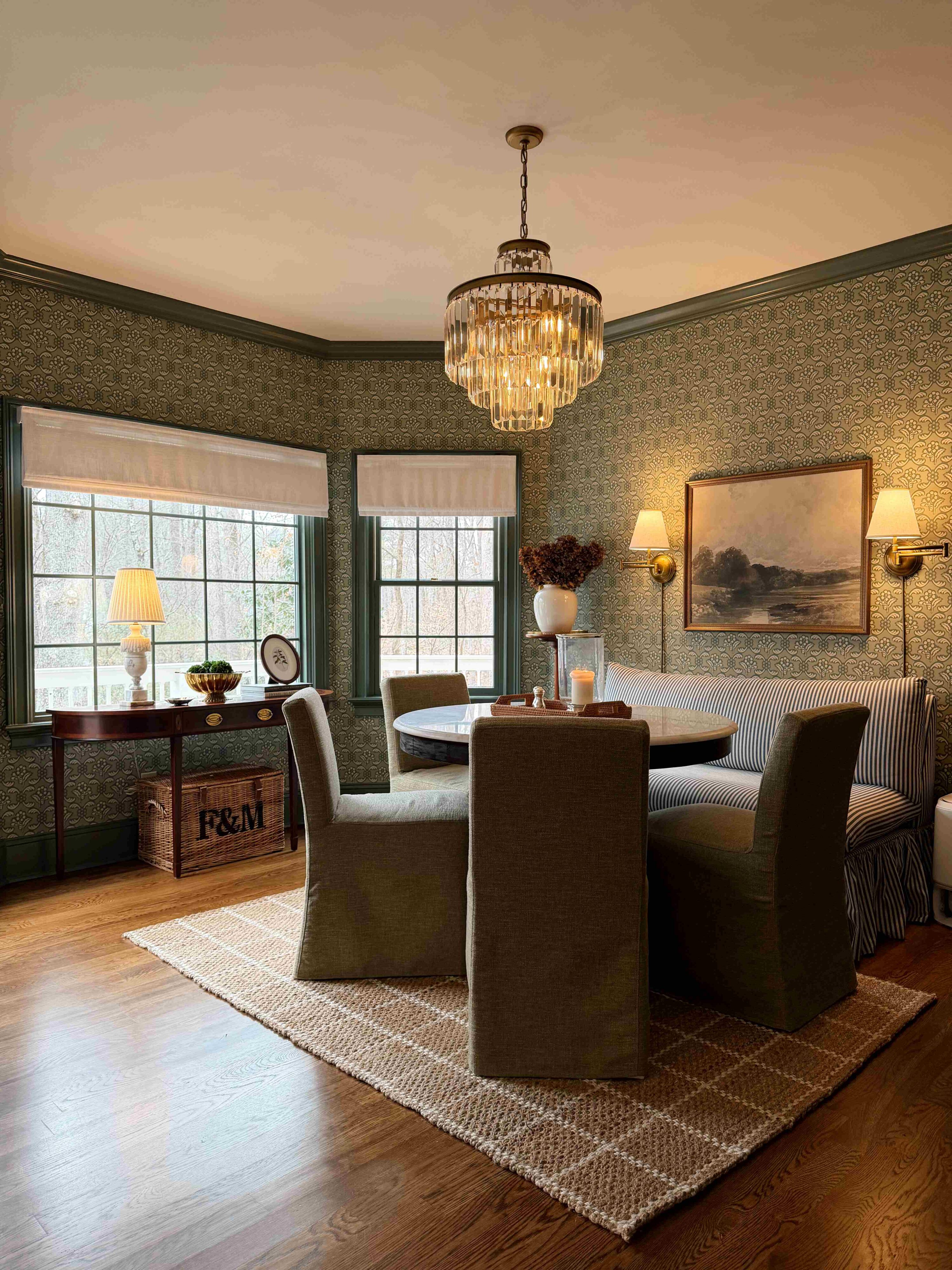
From there, we added a rug, a dimmer on our chandelier, found a plant stand for the corner, and decorated a couple of vignettes to make it all feel more intentional.
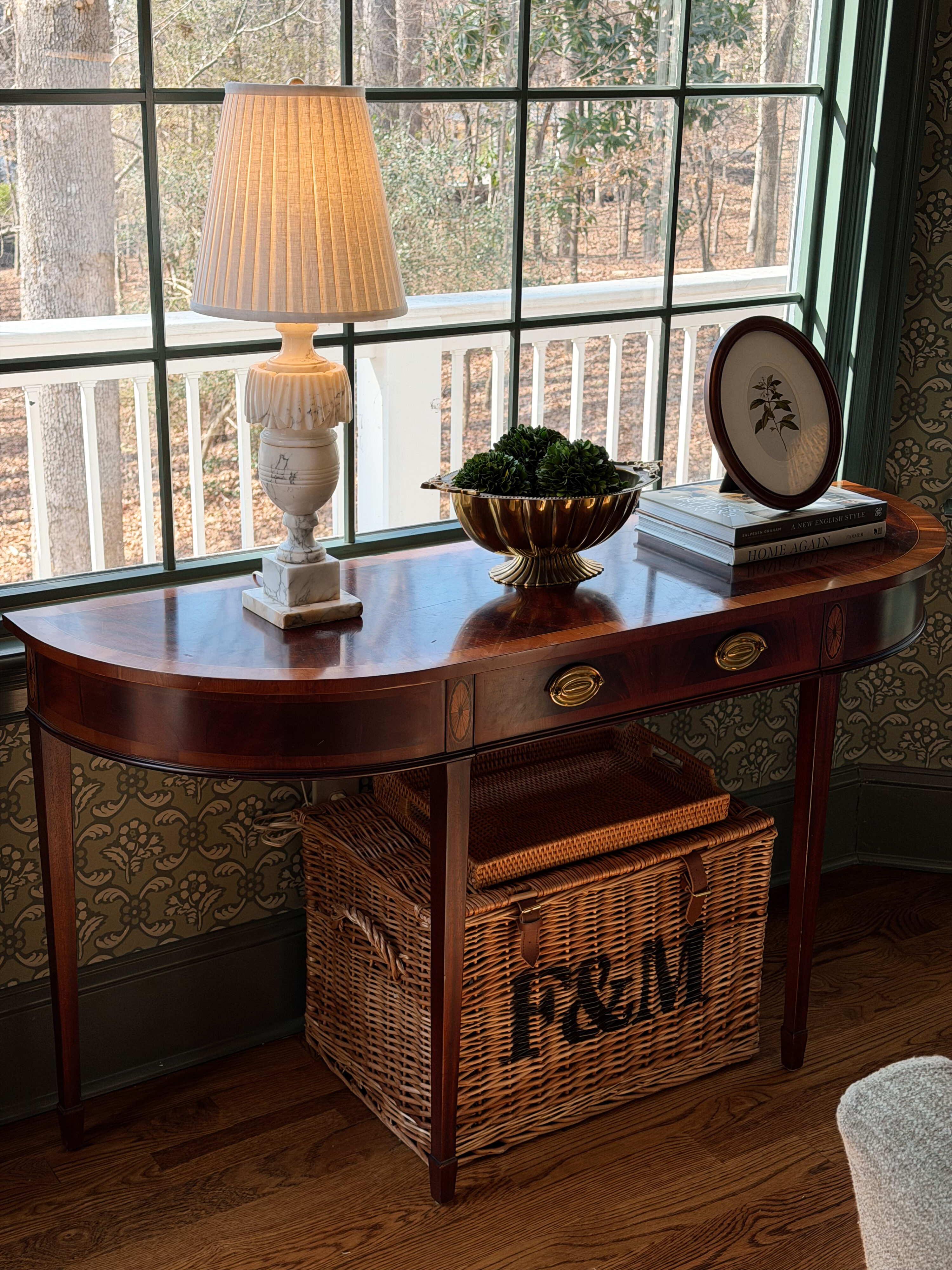
We found a small table at an antique store (above) that fit perfectly beneath the window, and then stumbled upon a hutch (below) that filled the open wall much better than our previous one did.

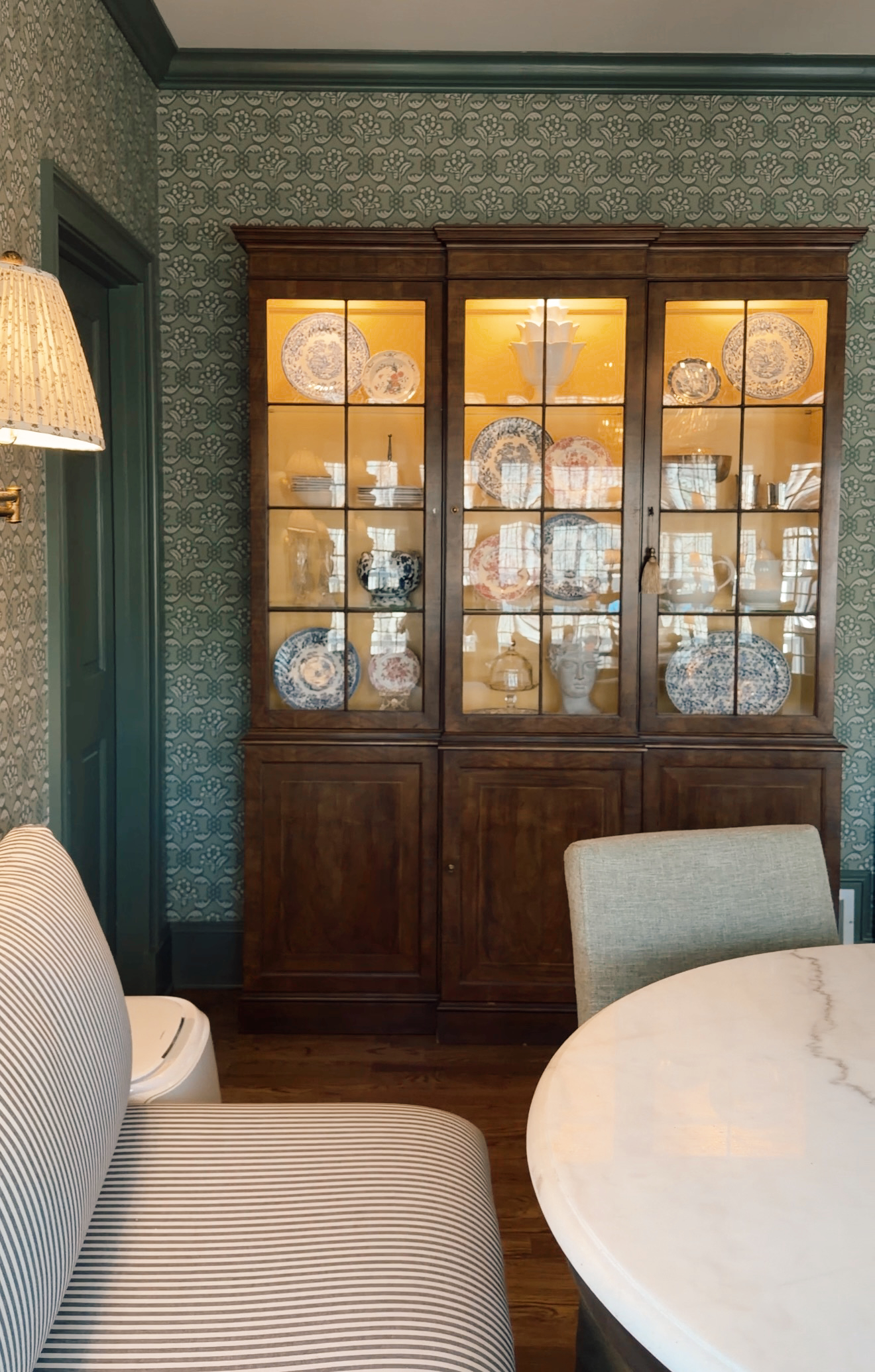
Now, we’ve found “the final 15” and feel like the room has really come together! It’s made us appreciate the process and iterations that have led us to loving a space that we use almost constantly. It’s a corner of our house that holds almost every meal and lots of moments in between, and it’s so nice to feel like it’s complete!
Here are 3 practical steps for practicing restraint in decorating your home:
Wait for the right moment.
*Looking for good deals or hunting for antiques/secondhand buys can not only be budget-friendly, but it also forces you to wait. Patience is a great indicator of whether you’ll love living with something in your home.
Decorate in vignettes.
*We say this often, but tackling the decor of a space in “bite-sized chunks” is a great way to avoid feeling overwhelmed. Decorate a coffee table, add a gallery wall, or, in our case, paint the trim and see if inspiration strikes!
Watch the Light.
*Observe how the light changes in a space throughout the day. What’s it like when you’re using it the most? Are there ways to amplify the light, compliment it, or add where there isn’t enough? Light transforms an ambience more than almost anything else, and watching it allows you to best determine how to use it. Pay attention to how light makes your home feel and maximize its impact!